
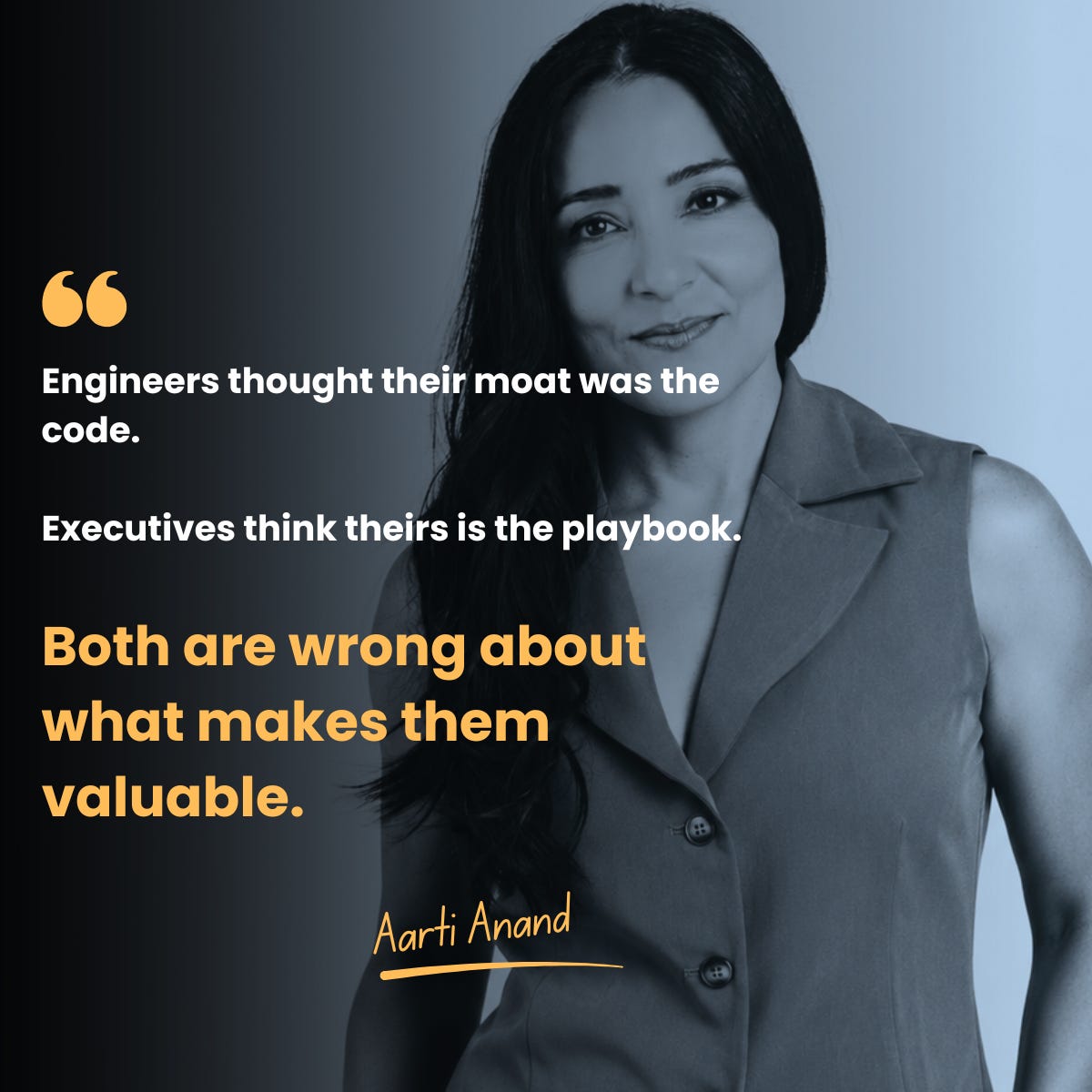
The moat was never the code!
Engineers learned this the hard way. Executives are next.

I started writing software in 2000.
Back then, the engineer was the person in the room everyone deferred to. Not because we were smarter. Because we did the thing nobody else could do. We wrote the code that made the business run.
For fifteen years, that identity got paid, protected, and elevated. Learn to code. High salaries. Elite hiring bars. The engineer as the celebrity of the modern company.
Then AI arrived and started writing the code.
I’ve watched engineers I respect go through the last two years in real time.
The ones who took it hardest are the ones who confused what they did with who they were. The code was the identity. When the code got easier for a machine to produce, the identity felt like it was under attack.
But the ones who came out sharper — and there are more of them than the internet suggests — figured out something important.
The moat was never the code.
The moat was the judgment underneath it. Knowing which problem is worth solving. Knowing which shortcut will haunt you in eighteen months. Knowing when to build and when to buy. Knowing what “done” actually means in a system that has to run at 3am with nobody watching.
AI didn’t take that away.
AI made that the whole job.
The engineer whose identity was “I write code” got a smaller role. The engineer whose identity was “I solve problems” got a bigger one. Same person. Same skills. Different frame.
I watch executives now going through a version of the same thing.
The AI decision feels like it’s asking them to become someone new. It isn’t. It’s asking them to be exactly who they’ve been for twenty years — the person who reads the room, runs the math, kills the bad idea, and makes the call — applied to a decision that happens to have “AI” in front of it.
The executives I’ve watched freeze on AI decisions aren’t unqualified.
They’re the most qualified people in the room. They just don’t trust the twenty years of judgment because the topic feels new.
The topic is new. The judgment isn’t.
The four weeks I spend inside a company aren’t teaching them anything new. They’re rebuilding the room so their existing judgment can land.
The playbook you built for approving capex works on AI capex. The instinct you built for hiring executives works on hiring the person who runs your AI strategy. The read you developed on vendors trying to sell you the last five things works on vendors trying to sell you AI.
None of it stopped being useful.
The only thing that changed is that the label on the decision is unfamiliar. And the vendors, and the boards, and the LinkedIn posts, have convinced everyone the label change means the judgment doesn’t apply.
It applies. It applies harder.
The engineers who figured this out are having their best years. The executives who figure it out will too.
Both groups had to give up the same thing to get there.
The idea that their value was in the surface skill instead of the thing underneath.